

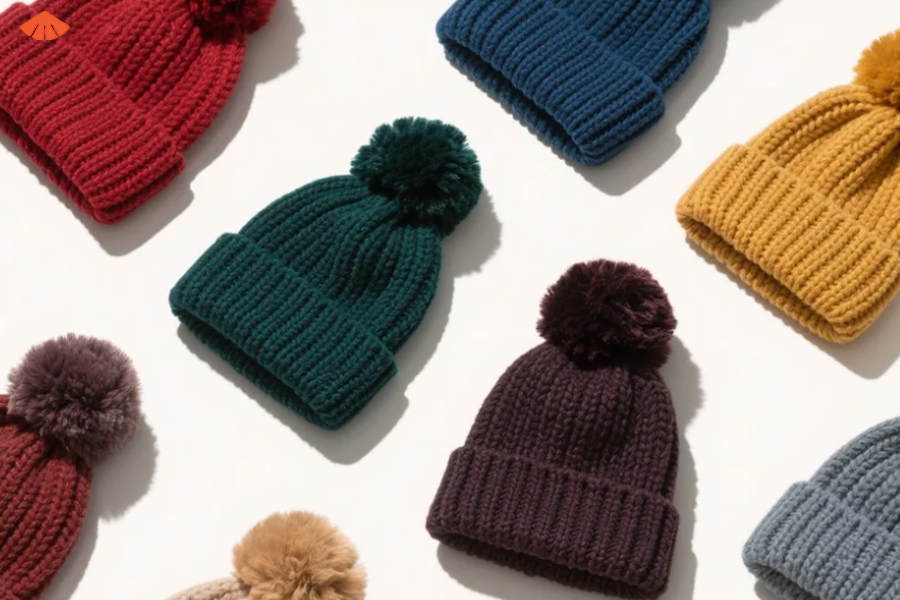
Cozy Thick Cable Knit Cuffed Faux Fur Pom Pom Beanie HatEmbroidery: Fix Distortion With Stabilizer & Stitch Tips
If you’ve ever embroidered a cozy thick cable knit cuffed faux fur pom pom beanie hat only to find the fabric stretched, pilled, or the design warped, you’re not alone. Knit headwear’s stretchy nature makes custom logo work tricky for brands and makers alike. This guide breaks down stabilizer choices, stitch density settings, and fabric matching secrets to get flawless results every time.
Whether you’re a headwear wholesale supplier fulfilling bulk custom orders, a small business owner selling branded winter accessories, or a freelance embroidery artist working with local shops, these tips will reduce waste, speed up production, and boost customer satisfaction.
Why Knit Beanies Warp During Embroidery (And What It Costs Your Business)
The Unique Stretch Properties of Cable Knit Fabrics
Cable knit fabric is made with interlocking yarn loops that give it 20-30% stretch in both directions, per textile industry data.
This elasticity is what makes a faux fur pom beanie comfortable to wear, but it’s also the top cause of embroidery distortion.
When the needle pierces the fabric repeatedly, it pulls the yarns out of alignment instead of staying in a fixed position.
Thick cable knits have extra texture from raised braided patterns, creating uneven surfaces for embroidery.
Even a small 2-inch logo can stretch 10-15% if the fabric isn’t properly stabilized.
For bulk orders, this means 5-10% of products may end up as defective waste.
Financial & Brand Impacts of Bad Embroidery for B2B Sellers
For a headwear wholesale supplier, defective embroidery can lead to 20-30% higher return rates from retail clients.
Outdoor gear retail shops and women’s fashion boutiques rely on consistent branding to build customer loyalty.
A single batch of warped logo beanies can damage a long-term business relationship.
Small business owners face even bigger risks:
Lost revenue from remaking defective products
Negative reviews from end customers
Delayed order fulfillment timelines
Wasted material costs for premium faux fur pom designs
Stabilizer (Embroidery Backing) Pairing Guide for Knit Beanies
Best Stabilizer Types for Thick Cable Knit Fabrics
Choosing the right stabilizer is 70% of the battle against embroidery distortion on knit beanies.
For a cozy thick cable knit cuffed faux fur pom pom beanie hat, you need a backing that holds the fabric’s shape without adding unwanted stiffness.
Here are the top options ranked by performance:
Used on top of the fabric to prevent stitches from sinking into yarn texture
Essential for fluffy cuffed beanie styles with fuzzy surfaces
Washes away completely for a clean finish
Water-soluble topping
Good for lightweight ribbed knit styles
Easy to remove quickly for fast turnaround
Not ideal for very stretchy cable patterns
Tearaway stabilizer with adhesive
Best for heavy cable knits and bulk production
Remains permanently in the hat to preserve design shape over washes
Recommended for custom logo orders from outdoor gear retail shops
Cutaway stabilizer (2.5-3 oz weight)
For best results, pair cutaway stabilizer with a water-soluble topping for allcable knit pom hatcustom orders.
This combination reduces distortion by up to 85% compared to using no stabilizer at all.
How to Apply Stabilizer Correctly for Cuffed Beanies
Proper application is just as important as choosing the right stabilizer type.
For a thick cuffed ribbed knit pom pom beanie, the cuffed area adds extra layers of fabric that can shift during embroidery.
Follow these steps for perfect placement:
Hoop the stabilizer tightly, then spray with temporary adhesive to attach the beanie
Avoid hooping the knit fabric directly, as this can stretch it out before you even start stitching
Position the design on the front center of the cuff, 1-1.5 inches above the folded edge
Use a pin to mark the center point, then double-check alignment with a ruler
For beanies with a54-58cmhead circumference, the standard logo size is 2-2.5 inches wide.
Larger designs are more likely to cause distortion, so keep custom logo&color requests within this size range when possible.
If a client requests a bigger design, upgrade to a heavier 3.5 oz cutaway stabilizer for extra support.
Stitch Density & Needle Settings That Prevent Fabric Pulling
Optimal Stitch Density for Different Knit Weights
Stitch density refers to how close together the embroidery stitches are placed.
Too high density on a warm pom pom hat will pull the fabric inward, creating a dimpled, warped look.
Too low density and the design will look sparse and unprofessional.
For cable knit beanies, follow these density guidelines:
Standard fill stitch: 4-5 stitches per mm (spm) for light designs
Heavy fill stitch: 5-6 spm for bold logos, only with heavy cutaway stabilizer
Satin stitch borders: 6-7 spm, with a slightly longer stitch length of 2-2.5mm
Lettering: Use 5 spm minimum for small text to prevent gaps
A women cozy thick cable knit pom pom beanie with a delicate brand name works best with 4.5 spm and a light fill.
For thick fuzzy winter hat styles with bold outdoor brand logos, 5.5 spm with a heavy cutaway backing is ideal.
Always test stitch density on a scrap of matching knit fabric before starting a full production run.
Needle Type, Tension & Machine Speed Adjustments
The right needle and machine settings can drastically reduce fabric distortion on knit headwear.
Many embroidery artists use the same needle for all fabrics, but knit beanies require specific tools to prevent yarn damage.
Key settings to adjust for knit beanie embroidery:
Slower speed reduces needle impact and fabric shifting
Critical for bulk orders where consistency is key
Machine speed: 600-800 stitches per minute (spm)
Lower tension prevents the top thread from pulling the knit fabric upward
Top tension: Reduce by 10-15% from standard woven fabric settings
Rounded tip slides between yarn loops instead of cutting them
Prevents holes and runs in cable knit fabric
Needle type: Ballpoint needles (size 75/11 or 80/12)
For faux fur pom beanie styles with pom poms attached, be sure to secure the pom pom away from the embroidery area with a clip.
A loose pom pom getting caught in the machine can pull the entire hat off alignment mid-stitch.
Matching Embroidery Designs to Specific Knit Beanie Styles
Cable Knit vs. Ribbed Knit: Design Adjustment Differences
Not all knit beanies are the same, and embroidery settings need to match the fabric structure.
A thick cuffed ribbed knit pom pom beanie has vertical ribbing that stretches more horizontally than vertically.
Cable knit styles have more uniform stretch in all directions due to their braided pattern.
Design adjustments by fabric type:
Cable knit (cozy thick cable knit cuffed faux fur pom pom beanie hat)
Use medium-weight cutaway stabilizer
Opt for rounded design shapes that follow the fabric’s natural stretch
Avoid sharp, angular corners that can pull and warp
Ribbed knit (thick cuffed ribbed knit pom pom beanie)
Use stretch-to-fit stabilizer for best results
Position designs across ribs, not along them, to reduce horizontal distortion
Slightly reduce stitch density to accommodate rib expansion
For women's fashion boutique clients selling trendy accessories, cable knit styles with delicate monograms are top sellers.
Outdoor gear retail shop clients usually prefer ribbed beanies with bold, durable logos that hold up to heavy use.
Understanding these differences helps you recommend the right beanie style for each customer’s needs.
Custom Logo & Color Best Practices for B2B Clients
When working with B2B buyers, custom logo&color requests are standard, but not all designs work well on knit beanies.
A headwear wholesale supplier that educates clients on design limitations will have fewer returns and happier customers.
Top tips for custom beanie embroidery success:
Logo complexity: Simple, bold designs work better than intricate details on thick fuzzy winter hat styles
Color choices: Contrasting thread colors make designs pop on cable knits; match yarn tones for a subtle, premium look
Size limits: Keep logos under 2.5 inches wide for standard
54-58cmbeanies to avoid distortion
Placement options: Front cuff, side cuff, and back slouch are the most popular and stable positions
For startup founders launching a new winter apparel line, start with a small test order of 50-100 beanies to perfect the embroidery before scaling up.
Freelance consultants can use these tips to advise clients on design choices that will look great and last through multiple winter seasons.
By mastering stabilizer selection, stitch density, and fabric matching, you can create flawless embroidered faux fur knit hat products that stand out in the competitive winter accessories market.
Interested in custom cap solutions? Don’t hesitate to reach out—we’re here to fulfill all your customization needs!
Follow & Message Us:
Facebook:https://www.facebook.com/fitwell.li
Instagram: www.instagram.com/fitwellcustomhats.dds/
LinkedIn:http://www.linkedin.com/in/fitwellcustom-hats-38a2b9b0/
Pinterest: http://www.pinterest.com/FitwellCustomHatsdds/
YouTube: http://www.youtube.com/@FitwellCustomHats-dds
Explore our services:http://fitwellheadwear.en.alibaba.com
WhatsApp us now: https://psce.pw/86jwa3