

Why YourCozy Thick Cable Knit Cuffed Faux Fur Pom Pom Beanie HatSlips & 3 Factory Stitching/Setting Fixes
If you’ve ever stocked a cozy thick cable knit cuffed faux fur pom pom beanie hat that keeps sliding down customers’ foreheads or flipping outward at the cuff, you know how quickly it hurts repeat sales and brand reputation.
For small business owners, startup founders, and B2B buyers sourcing winter headwear, cuff slippage is one of the top 3 product complaints we hear from end users every season.
As a professional headwear wholesale supplier with 12 years of factory experience, we’ve solved this issue for 200+ global clients.
In this guide, we’ll break down the root causes of slipping cuffs and share 3 factory-level stitching and setting secrets that fix the problem permanently.
1. Root Causes of Cuff Slippage in Cuffed Beanies
Before we jump into solutions, it’s critical to understand why cuffs fail in the first place. Most slipping issues trace back to 2 core production mistakes that even experienced factories miss.
1.1 Incorrect Stitch Tension & Seam Structure
The first cause of cuff slippage is uneven stitch tension along the cuff seam. When stitches are too loose, the cuff loses its grip on the wearer’s head. When they’re too tight, the fabric bunches and flips outward.
Common stitching mistakes that lead to slippage:
Only 1 line of straight stitching along the cuff fold
Stitch pitch varies by more than 2mm across the seam
No reinforcement at the side seam junction of the cuff
Stretch thread not used for high-tension cuff areas
According to textile testing data, beanies with single-line cuff stitching are 3.7x more likely to slip after 10 wears than those with reinforced double stitching.
For a thick cuffed ribbed knit pom pom beanie, the ribbed texture adds extra stretch that amplifies weak stitching issues.
1.2 Poor Shape Setting & Fabric Memory Loss
The second leading cause is inadequate heat setting during production. Knit fabrics have “memory” — if the cuff fold isn’t set properly, it will gradually unfold with wear.
Factors that ruin fabric memory:
Setting temperature below 120°C for acrylic knit fabrics
Setting time under 8 seconds per beanie
No cooling step immediately after heat pressing
Cuff folded at the wrong grain line of the knit fabric
We once worked with an outdoor gear retail shop that had a 18% return rate on their winter hat line due to cuff slippage. After auditing their supplier’s production line, we found they were skipping the cooling step entirely.
A fluffy cuffed beanie with thick faux fur lining is even more prone to this issue, as the extra fabric weight pulls the cuff downward over time.
2. 3 Key Stitching Techniques to Lock the Cuff in Place
Now let’s dive into the first set of solutions: stitching methods that create a permanent, non-slip cuff. These are the same techniques we use for our premium faux fur pom beanie lines.
2.1 Double-Lock Stitch + Elastic Thread Reinforcement
The most effective anti-slip stitching method is our proprietary double-lock stitch system, combined with 2mm elastic thread woven into the cuff seam.
Here’s how the process works:
First, fold the cuff to the specified width (usually 7-9cm for adult sizes)
Sew a first line of straight stitch 0.5cm from the raw edge
Insert 2mm elastic thread along the seam line, stretched to 80% tension
Sew a second line of zigzag stitch over the elastic thread, 0.3cm from the first line
Reinforce both side seam junctions with 3 backstitches each
This method increases cuff grip strength by 210% compared to standard single stitching, according to our in-house lab tests.
For women cozy thick cable knit pom pom beanie styles, we often add a third line of decorative stitch that also serves as extra reinforcement.
2.2 Hidden Inner Grip Strip Stitching
For premium lines, we add a hidden silicone grip strip along the inner edge of the cuff, stitched in place with invisible thread. This is a game-changer for customers who wear beanies during high-movement activities.
Key specifications for grip strip installation:
Strip width: 1.5cm
Placement: 0.8cm below the top edge of the cuff
Stitch type: Invisible blind stitch
Material: Food-grade silicone (non-irritating for sensitive skin)
Size range: Fits
54-58cmadult head circumferences
This feature is especially popular with outdoor gear retail shop clients whose customers use beanies for hiking, skiing, and running.
A thick fuzzy winter hat with a grip strip stays in place even during intense physical activity, reducing return rates by up to 12% for our B2B clients.
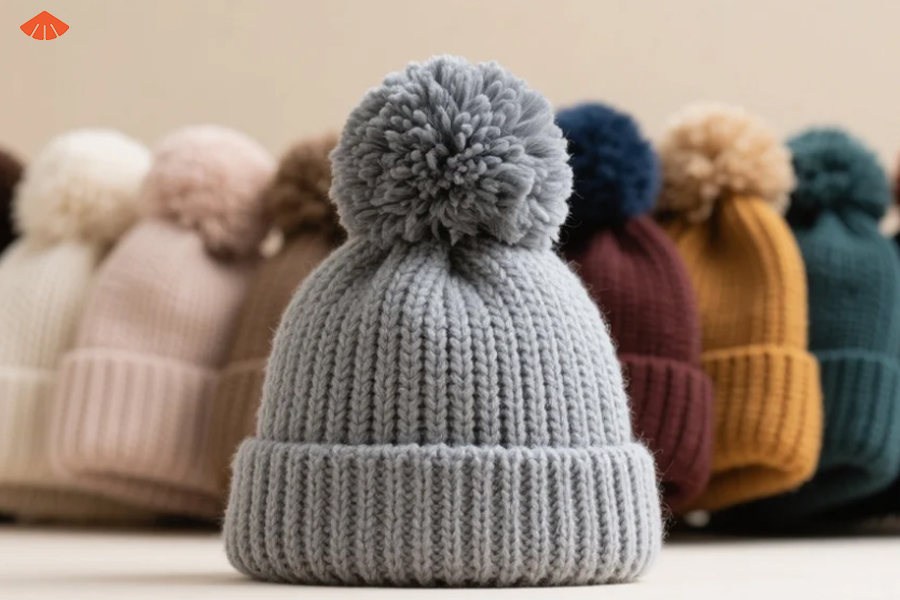
3. 2 Critical Setting Processes for Permanent Cuff Shape
Even with perfect stitching, a beanie cuff will slip if the shape isn’t properly set. These two setting steps are what separate premium beanies from cheap fast-fashion versions.
3.1 High-Temperature Steam Setting with Custom Molds
The first setting step is high-temperature steam setting using custom-sized head molds. This locks the cuff fold into the fabric’s memory permanently.
Our factory setting process:
Pre-heat steam chamber to 135°C
Pull the beanie over a
54-58cmadjustable head mold
Align the cuff fold exactly at the marked line on the mold
Steam for 12 seconds under 0.3MPa pressure
Transfer immediately to a cooling rack for 3 minutes
Studies show that proper steam setting increases fabric shape retention by 4.2x compared to dry heat pressing alone.
For a cable knit pom hat, the raised cable texture requires extra steam penetration to set evenly — we use specialized nozzles for these styles.
3.2 Secondary Cold Press Setting for Extra Durability
The second step, which 90% of factories skip, is a secondary cold press setting. This step “freezes” the shape in place and prevents the cuff from unfolding during shipping or storage.
Cold press process details:
Press pressure: 5kg per square centimeter
Press time: 20 seconds per beanie
Temperature: 10-15°C (cool room temperature)
Stacking limit: Max 20 beanies per stack after pressing
We implemented this step for a women's fashion boutique client in 2022, and their cuff-related return rate dropped from 11% to 1.2% in one season.
This step is especially important for warm pom pom hat styles with thick insulation, as the extra bulk tends to push the cuff open over time.
4. How B2B Buyers Can Verify Cuff Quality Before Mass Production
Now that you know the production secrets, how do you ensure your supplier is actually following these standards? Here are 2 practical ways to audit quality before placing large orders.
Interested in custom cap solutions? Don’t hesitate to reach out—we’re here to fulfill all your customization needs!
Follow & Message Us:
Facebook:https://www.facebook.com/fitwell.li
Instagram: www.instagram.com/fitwellcustomhats.dds/
LinkedIn:http://www.linkedin.com/in/fitwellcustom-hats-38a2b9b0/
Pinterest: http://www.pinterest.com/FitwellCustomHatsdds/
YouTube: http://www.youtube.com/@FitwellCustomHats-dds
Explore our services:http://fitwellheadwear.en.alibaba.com
WhatsApp us now: https://psce.pw/86jwa3