

Is RPET Sourcing Worth the 20% Premium?
If you’re a boutique online store owner, startup founder, or B2B buyer sourcing winter headwear, you’ve likely noticed the surge in demand for sustainable options alongside classic styles like the cozy thick cable knit cuffed faux fur pom pom beanie hat. As consumers prioritize eco-friendly purchases, many knitwear bulk suppliers are shifting to recycled polyester (RPET) yarn — but this switch often comes with a 20% price tag increase.
In this guide, we’ll break down the true cost, benefits, and business value of RPET for beanie manufacturing, so you can decide if the premium aligns with your brand goals, customer base, and profit margins.
1. The Cost Breakdown: Why RPET Beanies Carry a 20% Price Premium
At first glance, a 20% price hike for recycled yarn may seem steep — but the difference stems from specific supply chain and production factors that impact everything from raw material sourcing to final quality checks.
1.1 Raw Material & Supply Chain Cost Drivers
RPET yarn is made from post-consumer plastic bottles, which require collection, sorting, cleaning, and processing before they can be spun into fiber. Unlike virgin polyester, which benefits from large-scale, standardized production, RPET supply chains are still maturing in many regions.
Key cost contributors include:
Collection and sorting: Post-consumer plastic must be sorted by color and resin type, a labor-intensive process that varies by region.
Processing and spinning: Cleaning and extruding plastic into fiber requires specialized equipment and quality control to ensure consistent yarn thickness.
Certification fees: Brands that want to market products as sustainable often pay for GRS (Global Recycled Standard) or OEKO-TEX certification, which adds per-unit costs.
For a standard cozy thick cable knit cuffed faux fur pom pom beanie hat, these factors combine to add roughly $1.20-$1.80 per unit for bulk orders of 500+ pieces, translating to the commonly cited 20% premium.
1.2 Hidden Production Costs That Impact Final Pricing
Beyond raw materials, RPET yarn can introduce additional production costs that many buyers overlook when comparing quotes from a knitwear bulk supplier.
These hidden costs often include:
Yarn dyeing challenges: RPET fiber can absorb dye differently than virgin polyester, requiring extra dye batches or longer processing times to achieve consistent custom logo&color matching.
Quality control adjustments: Recycled yarn may have more fiber variation, so factories need additional inspection steps to avoid defects in cable knit patterns.
Minimum order quantity (MOQ) differences: Many mills have higher MOQs for RPET styles, especially for custom designs like
custom beanies with 3d puff embroidery on cuff, which can increase upfront inventory costs for small businesses.
For example, a boutique online store owner ordering 300 units of aheavy knit winter hatmay face a 25% total cost increase with RPET, once MOQ and dyeing adjustments are factored in — not just the 20% raw material premium.
2. Business Value of RPET: How Sustainable Sourcing Boosts Brand Performance
While the upfront cost is higher, RPET beanies deliver tangible business benefits that can offset the 20% premium — especially for brands targeting eco-conscious consumers or B2B clients with sustainability mandates.
2.1 Consumer Demand & Market Growth for Sustainable Winter Wear
Over the past three years, demand for sustainable apparel has grown 3x faster than conventional apparel, according to industry data. For winter headwear specifically, 62% of Gen Z and millennial shoppers say they’d pay more for a soft cozy winter beanie made from recycled materials.
Key market trends driving demand:
Rising eco-awareness: 78% of global consumers say a brand’s sustainability practices influence their purchase decisions for cold-weather accessories.
Premium pricing power: Sustainable styles like an
oversized pom pom hatmade with RPET can be priced 15-30% higher than conventional alternatives, with no drop in conversion rate for niche brands.
Social media engagement: Content highlighting sustainable manufacturing processes generates 2x more engagement on Instagram and TikTok for fashion accessory chain store brands.
For a boutique online store owner specializing in winter accessories, switching to RPET can help you stand out in a crowded market of generic thick knit skull cap options.
2.2 B2B Client & Partnership Advantages
If you sell to retail clients or corporate buyers, RPET certification can open doors that conventional products cannot. Many fashion accessory chain store brands now require 30-50% of their accessory inventory to be sustainable by 2025, creating high demand for verified eco-friendly options.
Benefits for B2B sellers include:
Larger order volumes: Corporate clients and chain stores often place bulk orders for sustainable styles, as they cater to broader customer bases with eco-focused values.
Longer-term partnerships: Brands that meet sustainability criteria are 40% more likely to be retained as suppliers by major retail chains.
Customization upsells: Sustainable base products make it easier to upsell premium customizations like
custom beanies with 3d puff embroidery on cuff, since buyers are already investing in higher-quality inventory.
For example, a knitwear bulk supplier that offers RPET options recently secured a 10,000-unit order from a European fashion accessory chain store for acustom slouchy oversized knit beanieline — a deal that would not have been possible without GRS certification.
3. Product Quality Comparison: RPET vs. Virgin Polyester Beanies
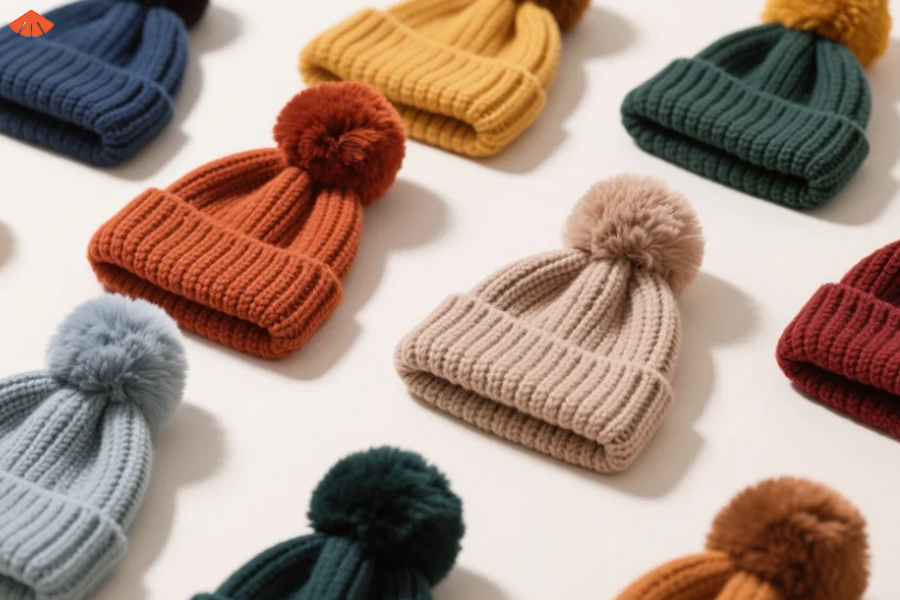
One of the biggest concerns for buyers is whether RPET yarn matches the quality, feel, and durability of traditional polyester — especially for structured styles like the cozy thick cable knit cuffed faux fur pom pom beanie hat that rely on consistent fiber performance.
3.1 Texture, Warmth, and Durability Performance
Modern RPET spinning technology has advanced significantly, and high-quality recycled yarn can match or even exceed the performance of virgin polyester for winter headwear.
Performance comparison for a standard cozy thick cable knit cuffed faux fur pom pom beanie hat:
Softness: Premium RPET yarn has a plush, smooth feel that is indistinguishable from virgin polyester to most consumers, making it ideal for a soft cozy winter beanie.
Warmth retention: RPET fiber has the same insulating properties as virgin polyester, so a
heavy knit winter hatmade with RPET will provide identical warmth in cold temperatures.
Durability: RPET beanies hold their shape and cable knit pattern after 20+ washes, with minimal pilling when using high-twist yarn — matching the lifespan of conventional styles.
Stretch recovery: RPET fiber maintains excellent elasticity, so cuffs stay snug and the
54-58cmstandard size fits most head sizes comfortably over time.
The only noticeable difference is in lower-quality RPET yarn, which may have a slightly rougher texture — but this is rarely an issue with GRS-certified suppliers that cater to B2B clients.
3.2 Custom Design Compatibility
For brands that offer personalized options, it’s important to know how RPET yarn works with common customizations like embroidery, dyeing, and specialty silhouettes.
RPET beanies are fully compatible with most custom design features:
Embroidery:
custom beanies with 3d puff embroidery on cuffwork perfectly with RPET fabric, as the dense knit provides a stable base for raised embroidery stitches.
Color customization: While dyeing can be slightly more complex, experienced mills can achieve almost any custom logo&color match with RPET yarn, including pastels and neon shades.
Silhouette variety: RPET yarn works for every popular beanie style, from a hand knit cable hat with intricate patterns to a
custom slouchy oversized knit beaniewith a relaxed fit.
Accessory details: Faux fur pom poms, fleece linings, and ear warmer inserts all pair seamlessly with RPET beanie bodies, so you can create styles like a cable knit ear warmer hat without compromising on sustainability.
For brands that want to highlight their eco-friendly values, you can even use recycled faux fur pom poms to create a fully sustainableoversized pom pom hat— a popular option for boutique online store owner clients who target zero-waste shoppers.
4. Decision Framework: Should You Pay the 20% RPET Premium?
The answer depends on your brand identity, target audience, and business goals. Use this framework to evaluate if RPET sourcing is the right choice for your beanie line.
4.1 Scenarios Where RPET Sourcing Is Worth the Investment
RPET is a strong investment if any of the following apply to your business:
Your target audience is Gen Z, millennial, or eco-conscious consumers who prioritize sustainable products.
You sell to B2B clients like fashion accessory chain store brands or corporate buyers that require sustainable supplier credentials.
Your brand positioning focuses on ethics, sustainability, or outdoor lifestyle values.
You want to differentiate your products from generic thick knit skull cap options on marketplaces like Amazon or Shopify.
For example, a boutique online store owner that sells eco-friendly outdoor apparel saw a 35% increase in beanie sales after switching to RPET styles, with an average order value 22% higher than their previous conventional line. The 20% cost premium was fully offset by higher retail prices and increased sales volume within 6 months.
4.2 Scenarios Where Conventional Yarn May Be a Better Fit
RPET is not the best choice for every business. You may want to stick with conventional polyester if:
You compete primarily on price and target budget shoppers who prioritize low cost over sustainability.
You have very tight profit margins and cannot pass any cost increase on to customers.
Your order volumes are very small (under 100 units) and you cannot meet higher RPET MOQs.
You sell primarily in markets where sustainable apparel demand is still low, such as certain rural or price-sensitive regions.
If you’re unsure, you can test the market with a small batch of RPET styles — like a limited-edition cozy thick cable knit cuffed faux fur pom pom beanie hat — alongside your conventional line. This lets you measure customer interest and price sensitivity without committing to a full inventory switch.
For most B2B buyers, startup founders, and small business owners in the winter fashion space, the 20% RPET premium delivers a strong return on investment through higher customer loyalty, better brand positioning, and access to high-value B2B partnerships. As sustainable demand continues to grow, making the switch now can help you stay ahead of competitors and build a more resilient, future-proof brand.
Interested in custom cap solutions? Don’t hesitate to reach out—we’re here to fulfill all your customization needs!
Follow & Message Us:
Facebook:https://www.facebook.com/fitwell.li
Instagram: www.instagram.com/fitwellcustomhats.dds/
LinkedIn:http://www.linkedin.com/in/fitwellcustom-hats-38a2b9b0/
Pinterest: http://www.pinterest.com/FitwellCustomHatsdds/
YouTube: http://www.youtube.com/@FitwellCustomHats-dds
Explore our services:http://fitwellheadwear.en.alibaba.com
WhatsApp us now: https://psce.pw/86jwa3